ServicesWhole-Home Filtration
Whole-Home Filtration in Uhland
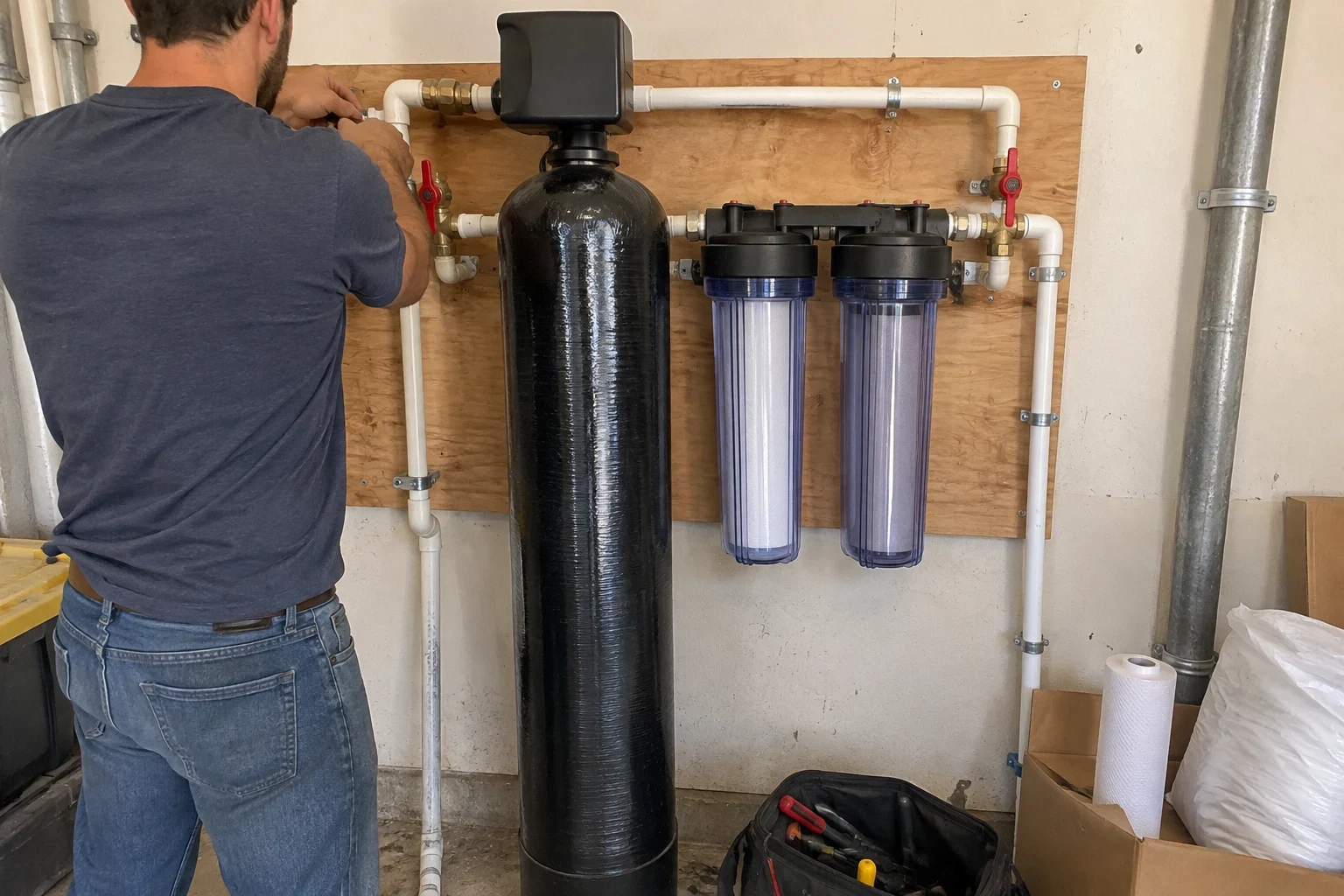
We install a filter where water enters your home, ahead of the water heater, so every faucet, shower and the washer draw treated water. It starts with a test at your tap, and you keep photos of the pipes before we touch them and after the final fitting.
What a whole-home system does
This kind of system treats water at the point it enters your home, before it branches off to any fixture or reaches the water heater. Most of our installs use two stages. A sediment prefilter traps grit and fine particles first. A tank of catalytic carbon then pulls out the chlorine or chloramine used for disinfection, along with the taste and odor they leave behind.
It makes sense when the problem is everywhere at once. The shower smells of disinfectant, the ice tastes flat, and the bathroom tap is no better than the kitchen. If your only concern is what you drink, a reverse osmosis system under the kitchen sink may suit you better. If the trouble is white scale and spotting, that is a hardness question with a different answer. Our test shows which one your water actually calls for.
We document the job as we go, from the condition of your existing pipes to the fittings we chose and the readings afterward. Those photos stay with you, so the details of what sits beside your water heater never depend on anyone's memory.
Inside every installation
- Testing comes first
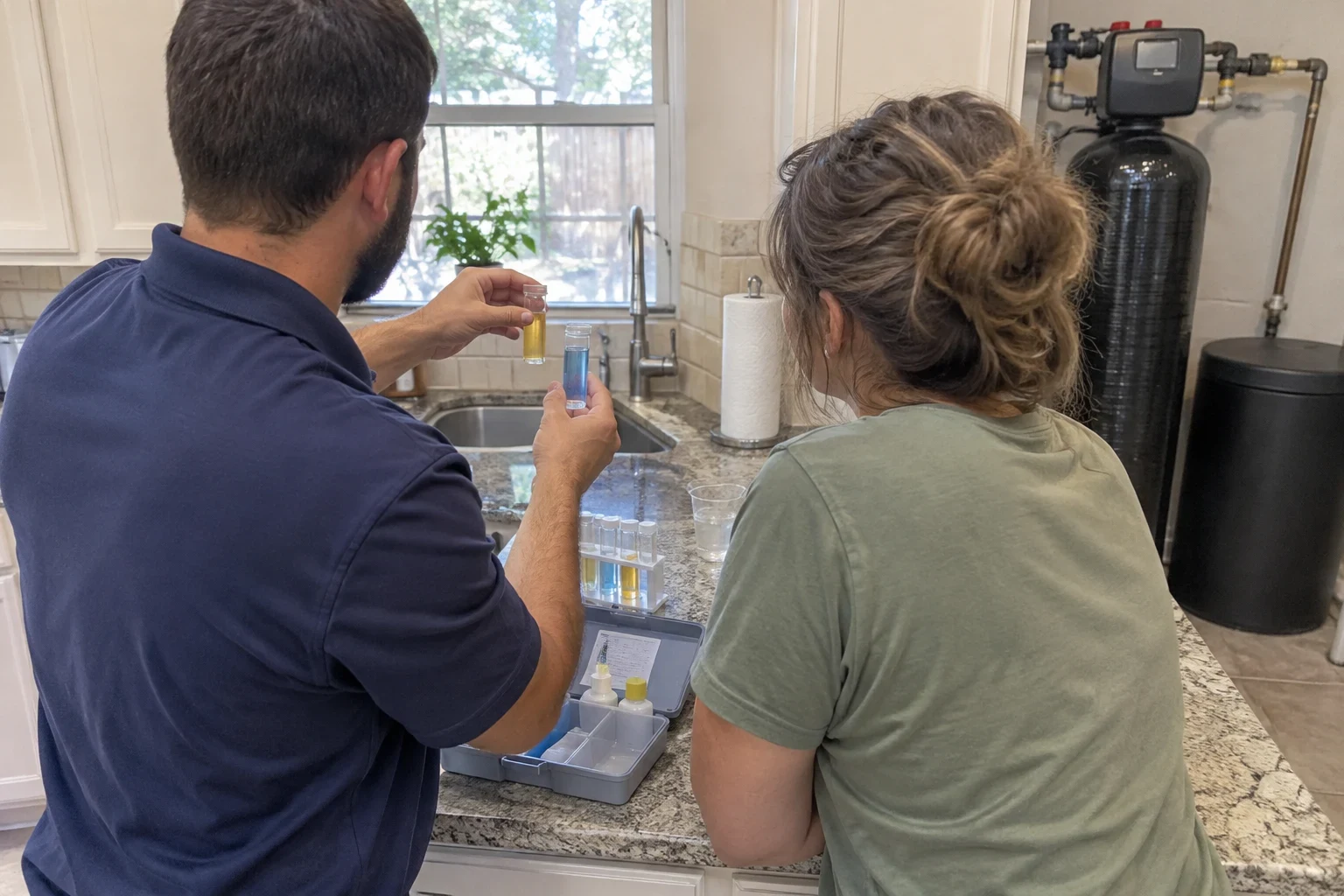
- Before we recommend any equipment, we measure chlorine, sediment, hardness and pH from your own tap. Those numbers set the media and the tank size.
- Sediment prefilter
- A cartridge housing sits ahead of the main tank and keeps grit away from the carbon, which extends its life. We mount it at an easy working height, so a change needs only a housing wrench and a few minutes.
- Catalytic carbon tank
- Catalytic carbon removes chloramine as well as chlorine, something standard carbon does poorly. The tank is sized to your bathrooms and peak flow so showers hold their pressure.
- Bypass valve and neat connections
- With a bypass in place, your water keeps running whenever the system needs service. We work in copper or PEX to match your existing lines, with runs kept square and strapped for a tidy, intentional finish.
- Photo record and a guided tour
- You get images of the job from start to finish. Before we leave, we show you the valves, the prefilter and the maintenance schedule.
When filtering the whole house makes sense
Bathrooms that smell like a pool
Heat drives disinfectant out of the water and into the air, so a closed shower is where many people notice it first. Treating the supply upstream of the water heater removes it before it gets warm.
Bottled water on the shopping list
If you buy cases of water or keep refilling a pitcher filter because the tap tastes off, the fix belongs at the source. One system covers every faucet in your home.
Debris in faucet screens
Fine sediment builds up in aerators, showerheads and appliance inlets. A prefilter catches it where the water comes in.
Coffee and ice that taste wrong
A disinfectant flavor carries into anything you make with tap water. Carbon strips it out before it reaches the kettle or the ice maker.
What shapes the price
Installation is free, so your quote covers the equipment your water needs and any plumbing work around it. Each line is itemized and explained before you agree to anything. Nothing appears on the bill that was not on the quote.
Bathrooms and peak demand
More bathrooms mean more fixtures running at the same moment. The tank has to be large enough to hold pressure through a busy morning, and a larger tank costs more.
Type of carbon media
Catalytic carbon for chloramine is priced above standard carbon. Your test result tells us which one is worth paying for.
Location of the main line
A line that is easy to reach in the garage is simple work. One tucked into a tight closet, or one that needs rerouting, takes more material and time.
Additional stages
Some homes benefit from a second prefilter, or from adding one of our salt-free water conditioners for scale. We suggest extras only when your results give a reason.
How the installation day runs
- 1
Free test and a look at the main line
We begin with a free water test and find where your main line comes in, often in the garage or near the water heater. You then get your quote by phone, with each component listed.
- 2
Protect the space, record the start
On install day we lay drop cloths along our route and document the existing plumbing before any cut is made. Where a permit is needed to tie into the main line, we pull it ourselves.
- 3
Install and tie-in
Water is off for a few hours while we cut in the bypass, mount the prefilter and set the carbon tank on a level base. Most installs are finished in a single visit.
- 4
Flush, retest and hand over
We flush the new media, compare the treated water with the first reading and take a final photo of the finished system. Then we clean up and show you how everything works.
Common questions on whole-home filtration
Does a whole-home system remove hardness too?
It doesn't. Carbon targets chlorine and the taste and smell it leaves, while calcium and magnesium pass straight through. If your test shows enough scale-forming minerals to cause trouble, we can talk about water softener installation or a salt-free conditioner as its own project.
Will my showers feel weaker afterward?
A properly sized system should not change how your showers feel. We match the tank and valve to the peak flow of your home and take a pressure reading at a fixture before and after the install. You see both numbers, not just our word on it.
What maintenance should I expect?
The sediment cartridge gets replaced on a regular schedule, and water with more grit uses them up sooner. The carbon bed lasts for years, depending on how much water your home goes through. At the walkthrough we swap a cartridge with you so the first one on your own is easy.
Is a separate drinking water filter still worth having?
Many people find treated water at the kitchen tap is enough of an improvement by itself. If you would like an extra layer for drinking and cooking, a reverse osmosis system under the sink pairs with the whole-home filter without any conflict.
What is the point of all the photos?
They let you see what we found and what we changed, without relying on anyone's recollection. They also give a future plumber a clear view of how your system was put together.
Start with a free test of your water
We will test your tap, look at your main line and walk you through an itemized quote. You decide from there, with no pressure either way.