ServicesSalt-Free Water Conditioners
Salt-Free Water Conditioners in Uhland
A salt-free conditioner keeps hardness minerals from building up as scale in your pipes, water heater and fixtures, with no salt bags, no brine and no drain line. We test your water first, then show you photos of what we found and what we installed.
What a Salt-Free Conditioner Does, and What It Doesn't
Most salt-free conditioners use a media called template-assisted crystallization. As water passes through the tank, dissolved calcium and magnesium are turned into microscopic crystals that stay suspended in the water instead of sticking to hot surfaces. The minerals are still there. They simply stop forming the hard white crust inside your water heater, on shower glass and around faucet aerators.
That difference matters, and we explain it plainly. A conditioner does not make water feel slippery the way a softener does, and soap lathers about the same as before. What you gain is a system that uses no electricity, sends no brine down the drain and needs no salt carried in from the garage. For homes around Kyle and Buda, where hard water is common, that is often the right balance.
It is not the right call for every home. High iron, manganese or very hard water can overwhelm the media, and in those cases a traditional softener or iron removal may serve you better. A water test tells us which, before you spend anything.
What Your Installation Includes
A water test before we recommend anything
We check hardness, iron, chlorine and pH at your tap. The results decide whether a salt-free system fits, and you keep a copy.
A record of your existing plumbing
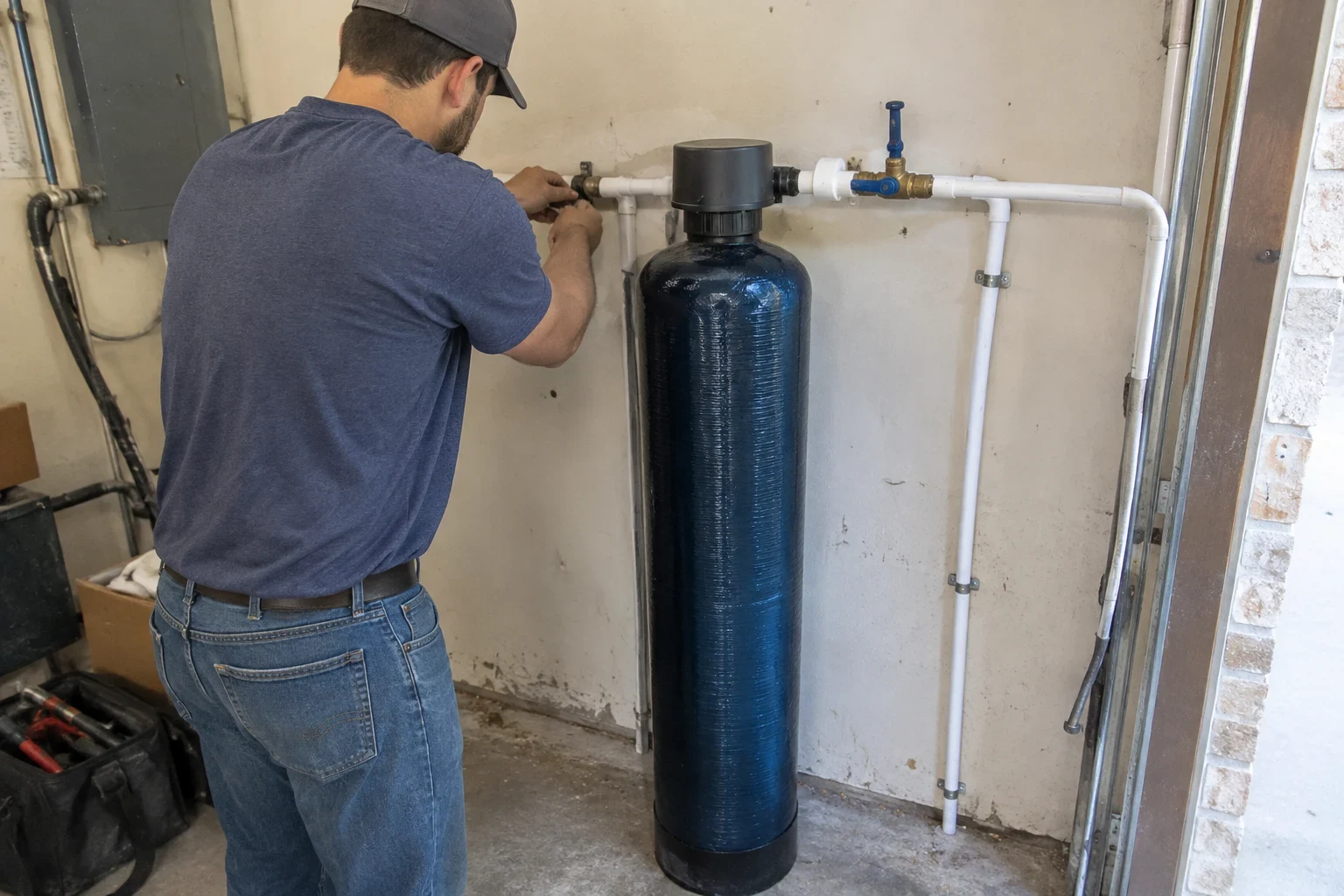
Before we cut in, we photograph the main line, the shutoff and any scale we find on the water heater drain or fixtures. You see the starting point for yourself.
Sediment and carbon pre-filtration
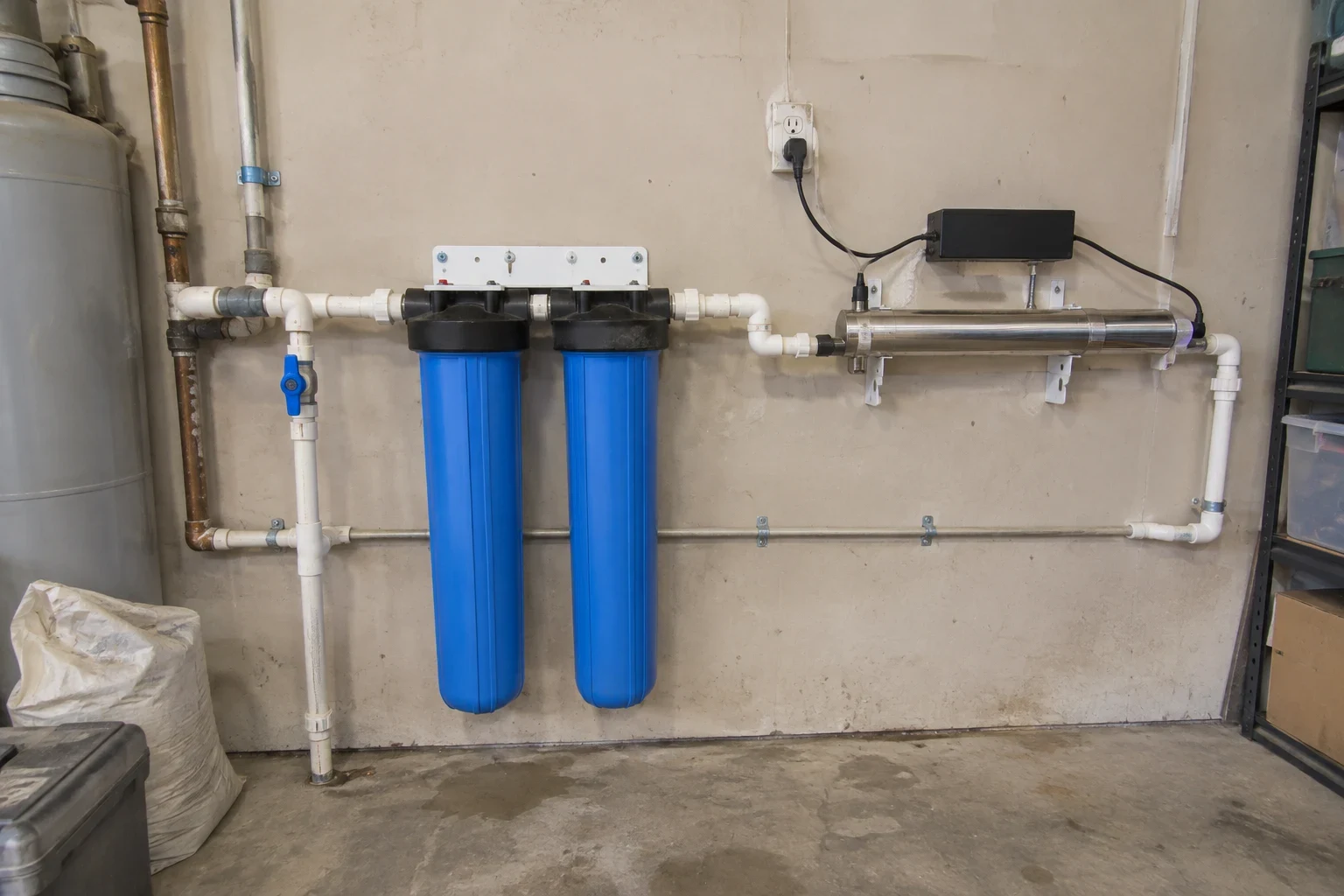
Conditioning media lasts longer when sediment and chlorine are removed ahead of it. When your test calls for it, we add a pre-filter so the tank does its one job well.
A service bypass and tidy fittings
With a bypass valve in place, the tank can be taken offline for service and water still reaches every faucet in your home. Fittings are squared, supported and labeled, so the work is as neat to look at as it is sound.
A walkthrough when we finish
We show you the bypass, the pre-filter housing and what maintenance looks like. You get the full photo set from the day, so you have a record of how everything was installed.
Signs a Salt-Free Conditioner May Help
White crust on faucets and showerheads
Chalky buildup that returns weeks after cleaning is calcium scale. A conditioner slows that cycle considerably.
A water heater that pops or rumbles
That sound usually comes from scale settling at the bottom of the tank. Keeping new scale from forming protects efficiency and the heating element.
You don't want to haul salt
Softeners need salt refilled on a schedule. If lifting heavy bags is a chore, or you would rather keep sodium out of the picture, salt-free is worth considering.
Your HOA or septic setup limits brine
Some homes have reasons to avoid a brine discharge line. A conditioner has no regeneration cycle and no wastewater.
Cloudy spots on dishes and glass
Conditioned water still leaves some spotting as it dries, but scale that bakes on in the dishwasher is usually reduced. We tell you honestly what to expect.
Your Installation, Step by Step
- 1
Start with the numbers
Your water test is free, and we go over each result with you before any equipment comes up. When a salt-free conditioner is the wrong match, we tell you and point to what would serve you better.
- 2
Size the system to your home
Tank size follows your flow rate, which depends on bathrooms and how many people use water at once. An undersized tank lets scale slip through during heavy use.
- 3
Install with care at the main line
We protect the floor, shut off the water, cut in the bypass and set the tank level on a firm base. Every connection is checked for leaks under full pressure.
- 4
Document and hand over
We record the finished installation, flush the system and clean up the work area. You receive the full record along with notes on pre-filter changes and media replacement.
What Moves the Cost
The price depends on your water and your plumbing, so we quote after the test rather than before it. Free installation is part of our offer. You get a clear quote by phone that lists each part, so nothing appears later that you did not see.
- Tank size and flow rate
- A larger home with several bathrooms needs more media to keep up at peak use. Sizing is the biggest single factor.
- Pre-filtration needs
- If your test shows sediment or chlorine, a pre-filter is added to protect the media. Some homes need it, some do not.
- Where your main line runs
- An accessible line in the garage is straightforward. A line in a tight closet or one that needs rerouting takes more parts and time.
- Condition of existing plumbing
- Corroded valves or old fittings near the tie-in point may need replacing. We show you what we find and explain it before any added work.
Salt-Free Conditioner Questions
Something not covered here? (512) 598-5861
Is a salt-free conditioner the same as a water softener?
No. A softener removes calcium and magnesium through ion exchange using salt. A conditioner leaves those minerals in the water but changes their form so they don't stick as scale. If you want the slick feel of soft water, a water softener installation is the better choice.
Will I still see water spots?
Some, yes. Minerals remain in the water, so drops that dry on glass can leave a faint mark. The hard, crusty buildup that needs scrubbing is what conditioning reduces.
How much maintenance does it need?
Very little. If you have a pre-filter, the cartridge is changed periodically depending on use. The conditioning media itself is replaced every few years, and we let you know what to watch for based on your water.
Can it be paired with other filtration?
Yes. Many homeowners pair a conditioner with whole-home filtration for chlorine taste, or add a reverse osmosis system at the kitchen sink for drinking water. We plan the order of equipment so each part protects the next.
What if my water has iron in it?
Iron and manganese can coat conditioning media and shorten its life. If your test shows them, we will talk through iron and sulfur removal ahead of the conditioner or recommend a different approach.
Find Out Whether Salt-Free Fits Your Water
Start with a free water test. We will share the results, show you photos of your plumbing and give you a clear quote by phone.