ServicesWater Softener Installation
Water Softener Installation in Uhland
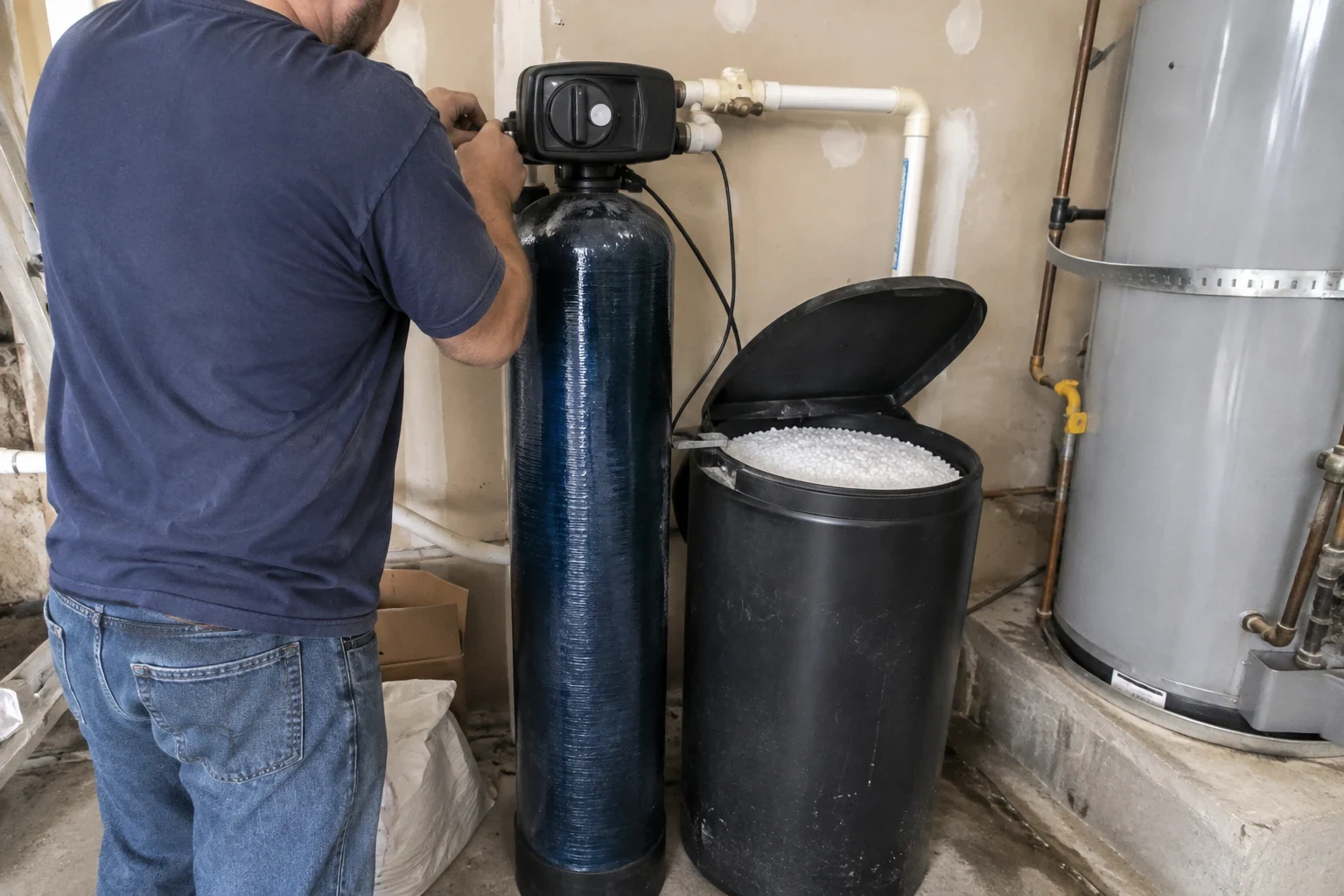
We install water softeners sized to your home's measured hardness and daily water use, not a guess. You get photos of the old setup, the new valve and every connection, plus an honest answer on whether a softener is the right fit at all.
What a softener does, and when it makes sense
Hard water carries dissolved calcium and magnesium, and those minerals are what turn into scale inside pipes, fixtures and appliances. A softener traps them on a bed of resin beads in its main tank, trading each captured mineral for a little sodium or potassium. When the resin has taken on all it can hold, the control valve flushes it with brine from the salt tank, and the beads are ready to work again.
A softener earns its place when testing shows enough hardness to build real scale and you are fine keeping salt on hand. Hardness across Uhland and nearby towns such as Kyle and Buda depends on the supply feeding each home, so we measure yours before suggesting any equipment. When the reading is modest, or salt is not something you want to manage, we tell you plainly and talk through Salt-Free Water Conditioners as the alternative.
We photograph the job from start to finish. You see the condition of your main line when we arrived, each change we made and the completed install, so you can judge the work for yourself.
What the installation includes
- Hardness and usage check
- Our first reading is hardness, measured in grains per gallon. We also note how many people share your home, since household size and hardness together decide how large the system should be.
- Correct sizing
- We match capacity to your real daily water use. An undersized unit regenerates too often and goes through salt quickly. An oversized one lets the resin sit idle, and water can start to channel through it unevenly.
- Main-line connection with bypass
- The softener is plumbed in at the point where water enters your home. A bypass valve lets you isolate it for service while the rest of the house keeps running water.
- Proper drain and overflow
- The regeneration line ends at a drain with an air gap, and the brine tank has a separate overflow line. Small as they are, these details stop wastewater from finding its way back into the system.
- Valve programming
- We set a metered valve so it regenerates by gallons used instead of on a fixed schedule. In lighter weeks, that means less salt and less water spent.
- Before-and-after record and cleanup
- You get photos of the setup as we found it, each connection and the finished install. Old fittings and packaging leave with us, and the space is returned to the way it was.
Signs your water is leaving scale behind
Chalky film on faucets
Scale builds up on faucets, showerheads and shower glass, and it is back within days of a good cleaning.
Spots on dishes and glasses
Glassware comes out of the dishwasher cloudy or spotted even with rinse aid.
Soap that will not lather
Shampoo and soap feel like they need double the amount, and a film stays on skin and tubs.
A rumbling water heater
Popping or rumbling from the tank often means mineral sediment has settled on the bottom, which makes the heater work harder.
Stiff laundry
Towels feel rough and dark clothes fade or look dull sooner than they should.
What moves the price
We offer free installation, so most of your quote reflects the equipment and any plumbing your home needs. We explain each line before you decide, and the photos show why any extra work is there.
System capacity
Higher hardness and a larger household call for more resin and a bigger tank.
Existing plumbing
A home with a pre-plumbed softener loop is simpler. Without one, we tie into the main line and may need a longer run of pipe.
Drain and power location
The valve needs a nearby outlet and a drain. Longer runs to reach them add materials.
Valve and add-ons
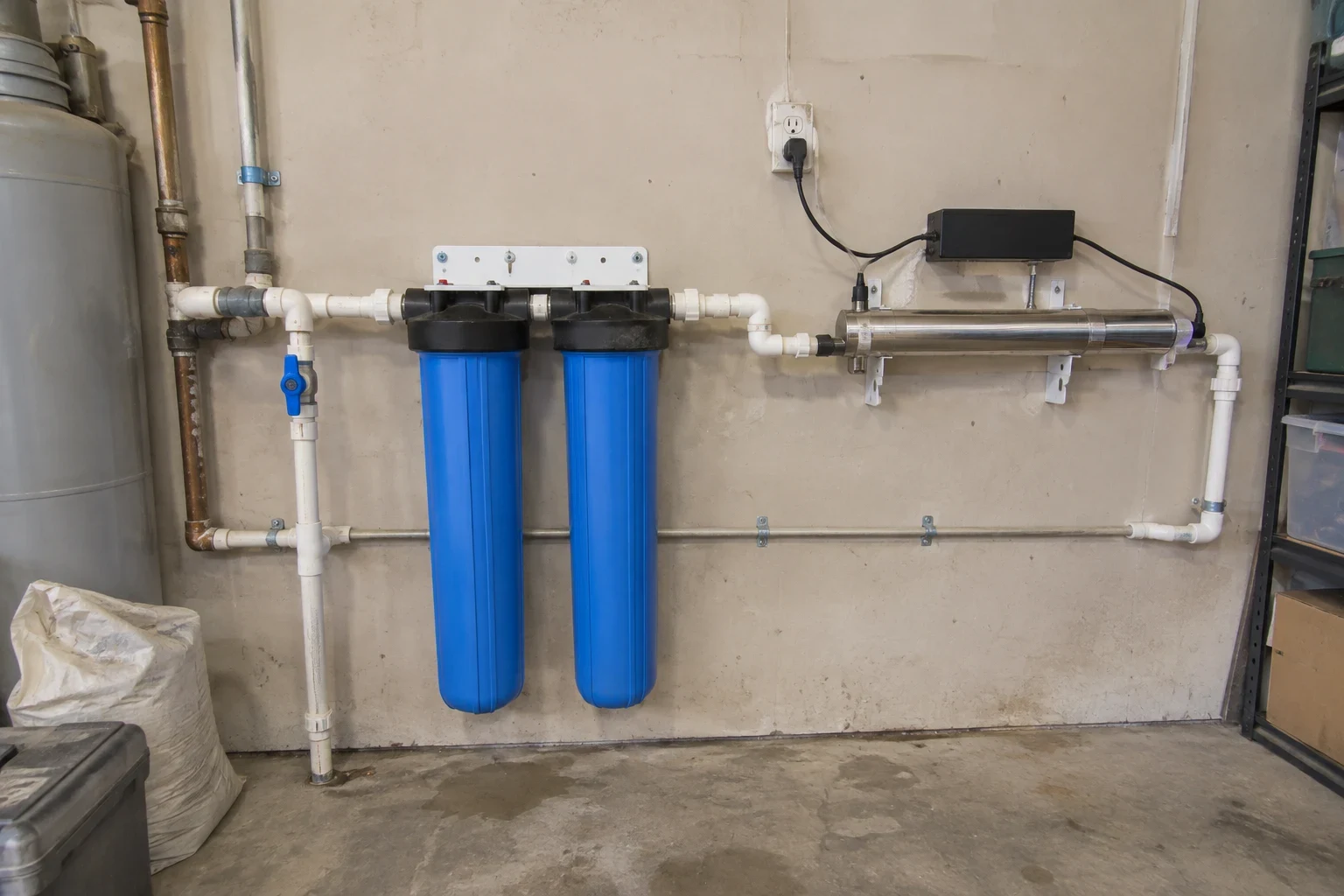
Metered valves, a sediment pre-filter or a drinking water system from our Reverse Osmosis Systems page each change the total.
How the work goes
- 1
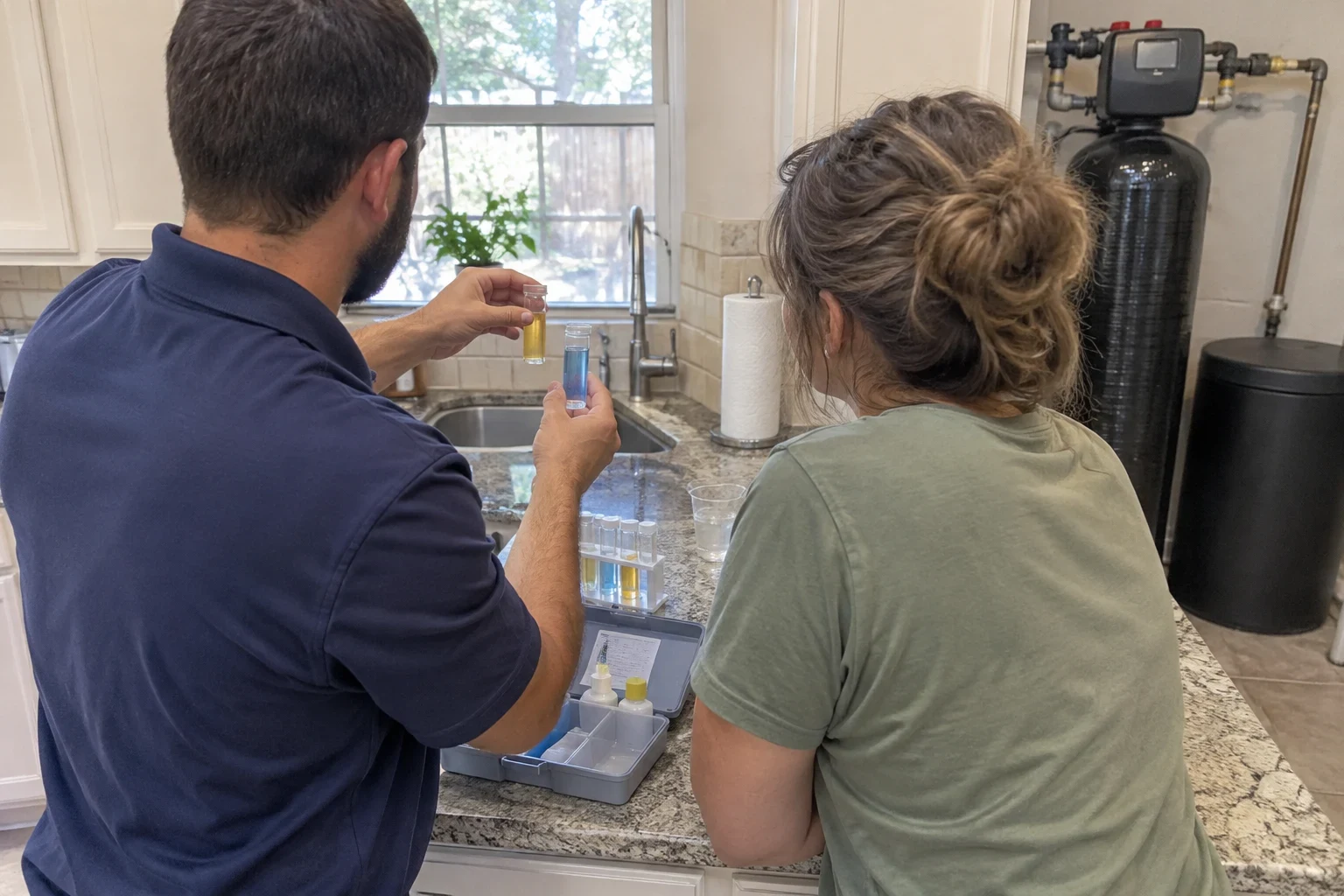
Your phone call and a free water test
Once you reach us by phone, we arrange a visit and run the test in your home. A low hardness reading is shared with you before any quote is written.
- 2
Your quote, line by line
While we are there, we photograph the main line, the drain options and the closest outlet. The quote then spells out the system size and any plumbing changes, one item at a time.
- 3
Installation day
With the water off, we cut in the bypass and connections, route the drain and overflow, and add the resin and salt. Drop cloths protect your floors and nearby surfaces throughout.
- 4
Testing and walkthrough
We run a complete regeneration cycle, test the water again and inspect every fitting under pressure. You are shown how to add salt and use the bypass, and the full photo record of the job is handed over before we go.
Questions about water softeners
How often will I need to add salt?
It depends on hardness and how much water your home uses. Many households check the brine tank monthly and top it off when it drops below about half. We show you what a healthy salt level looks like during the walkthrough.
Will softened water taste salty?
No. The amount of sodium added is small and does not make water taste salty. If you are watching sodium, potassium chloride works in place of salt, or you can pair the softener with a reverse osmosis faucet for drinking and cooking.
Should I get a softener or a salt-free conditioner?
A softener removes hardness minerals. A salt-free conditioner changes how they behave so they scale less, but they stay in the water. Your test results and preference about salt decide it, and we walk through both honestly.
Do outdoor faucets go through the softener?
Usually not. Where the plumbing allows, we keep hose bibs on unsoftened water so you are not spending salt on the lawn. What we see at your main line during the water test tells us what is possible in your home.
How long does installation take?
Most installs with an existing loop finish in one visit. The water is shut off just for the connection work, and you get a rough time for that before we start.
Find out whether a softener fits your water
Start with a free water test at your home. You will see the numbers and get a clear quote before anything is installed.