ServicesWater Testing & Analysis
Water Testing & Analysis in Uhland
Before anyone recommends a filter or softener, you should know what is actually in your water. We test at your tap, photograph each reading as it develops and walk you through what the numbers mean. Sometimes the honest answer is that you need very little.
Know your water before you buy anything
Water testing is where every good treatment decision begins. A softener, a reverse osmosis unit and a carbon filter each solve a different problem, and the wrong one costs money without fixing the spots, smell or taste that made you call.
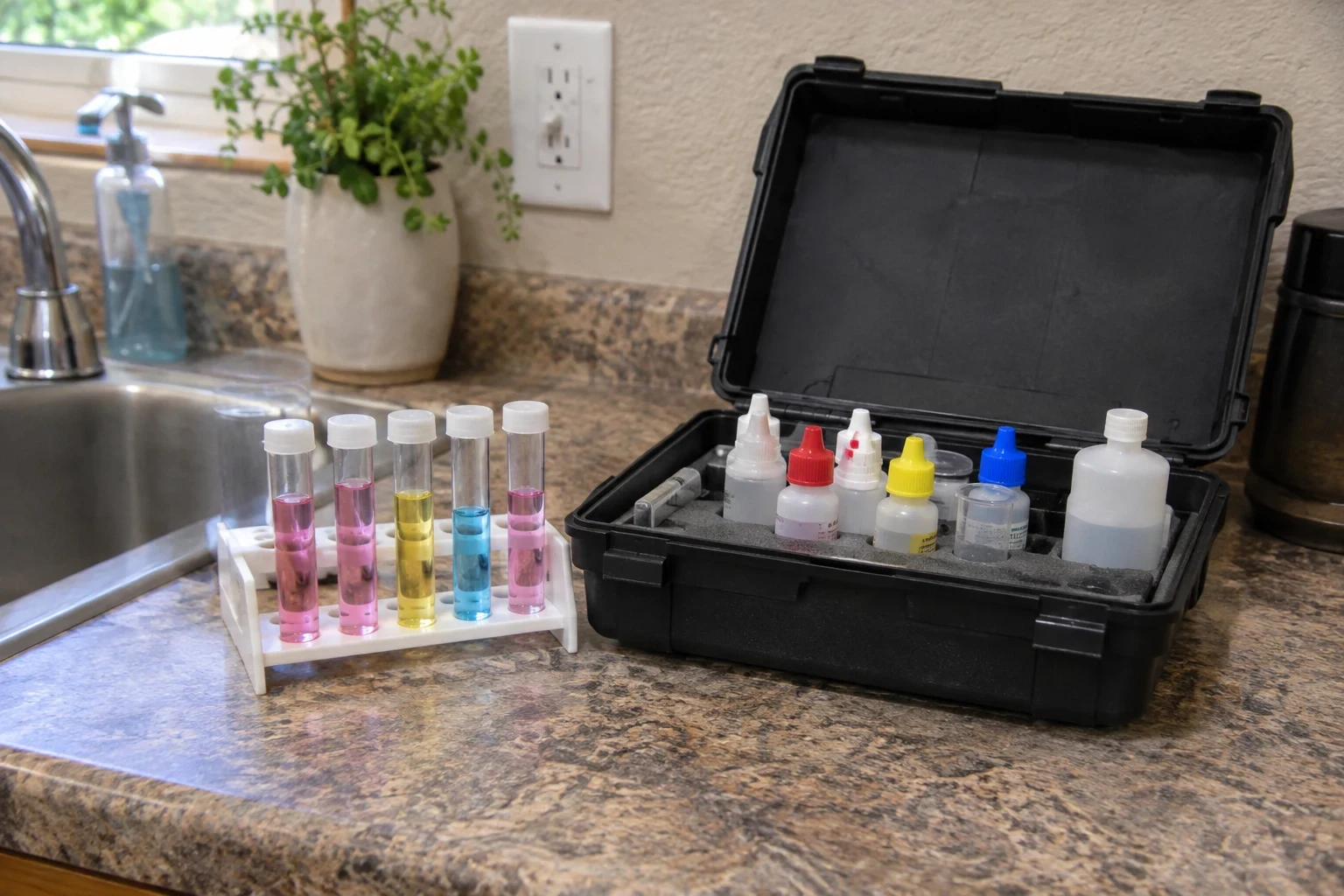
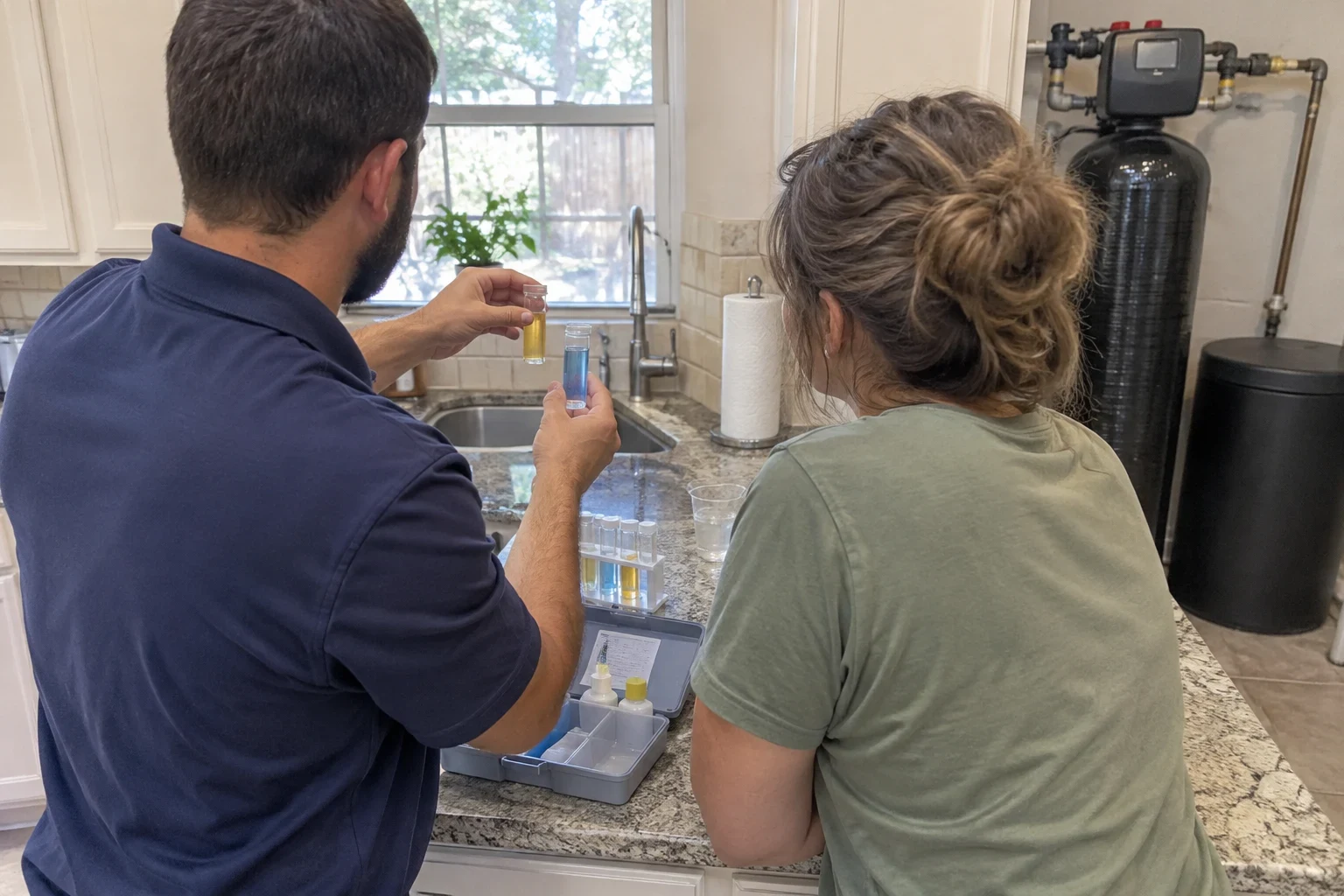
We test in your home, at the tap you actually drink from. Each strip, meter reading and color comparison is photographed beside a label, so you keep a clear record of what we found rather than a figure you have to take on trust.
Much of the water in Central Texas passes through limestone, which often leaves it on the hard side. That is a reason to measure, not assume. Two homes on the same street can read differently depending on plumbing age, fixtures and any equipment already installed.
What the analysis covers
Hardness
We measure calcium and magnesium in grains per gallon. This single number decides whether a water softener, a salt-free water conditioner or neither makes sense for your home.
Chlorine
Free and total chlorine readings explain most taste and odor complaints. They also tell us whether whole-home filtration with carbon would be a sensible fit.
Iron, manganese and sulfur
Low levels of iron and manganese leave orange or dark stains on porcelain and laundry. We also check for the rotten-egg smell that points to sulfur, which shapes any iron and sulfur removal advice.
Dissolved solids and pH
A total dissolved solids meter shows the overall mineral load, and pH tells us how the water will treat pipes and fixtures. Together they help judge whether a reverse osmosis system would add real value at the kitchen sink.
A visual record
Every reading is captured in a dated picture as it is taken. You see the same images we do, and they stay useful if you want a second opinion or plan to test again later.
A plain recommendation
We explain what each result means for your home and what, if anything, is worth treating. If the water reads well, we say so.
When testing makes sense for your home
- Chalky buildup on faucets
- A dry white film on shower glass, faucet aerators and the inside of a kettle usually comes from hardness. Measuring it tells us how much is there, which matters before you pick equipment.
- A pool-like taste or smell
- A strong chlorine note at the tap is common and usually harmless, but it is unpleasant to drink. Measuring it tells us how much carbon would be needed to remove it.
- Orange or gray stains
- Rust-colored rings in toilets or dingy whites in the laundry often point to iron or manganese.
- An egg-like odor
- A sulfur smell, especially from hot water, deserves a closer look before you replace a water heater or buy a filter.
- Older plumbing
- If your home has aging pipes or fixtures, a test helps you understand what the plumbing may be adding to otherwise good water.
- Before buying a system
- If someone has quoted you a softener or filter without testing first, it is worth checking the water yourself before committing.
How a testing visit runs
- 1
Your call to us
Over the phone, describe what you have been seeing, smelling or tasting, and at which fixtures. We agree on a convenient time and mention the taps we would like to sample.
- 2
Sampling at your tap
We run the cold water briefly and sample at the kitchen sink, plus a second point such as a bathroom or the hot side if the complaint calls for it. Counters are wiped down and nothing is left behind.
- 3
Tests run on site
Each test is run in your kitchen and photographed next to its label as the result develops. Most visits take well under an hour.
- 4
Your results, explained
We sit with you, go through each image and reading, and tell you plainly what is worth treating and what is fine as it is. If a system would help, we give you a quote by phone or in person, with no pressure to decide that day.
- 5
Lab work, only if needed
Some questions, such as lead from older plumbing, need an independent laboratory. If your results point that way, we explain the option and its cost before anything is sent.
What affects the cost of testing
The in-home water test is free, and you leave with the images and an explanation of every result. Costs only come into the picture when a question goes beyond what an on-site test can answer. We tell you about any of these before the work happens, never after.
- Independent lab analysis
- Lead, bacteria and some trace contaminants need an outside laboratory. The lab sets its own fees, which vary with the number of items tested.
- Number of sample points
- Most homes need one or two taps checked. Tracking a problem to a specific fixture or line can mean more samples and more lab work.
- Follow-up testing
- A retest after a system is installed, or a seasonal check, is usually part of the same visit at no charge when it is on-site. Lab retests carry the lab's fee.
- Equipment you choose
- If treatment makes sense, the system you pick drives the quote. Installation is free on the systems we install.
Water testing questions
- Is the water test really free?
- Yes. The in-home test, the images and our explanation cost you nothing. The only time a charge comes up is if you choose to send a sample to an independent lab, and we discuss that with you first.
- Is the visit a sales pitch for equipment?
- No. Our job on the day is to explain the readings and whether treatment would help. If the water reads well, we suggest leaving it alone. When something is worth treating, you get a quote and the time to think it over.
- How long does the visit take?
- Most visits take under an hour, including time to talk through the results. A home with several complaints, such as both staining and odor, may take a little longer.
- Do I need to do anything before you arrive?
- Try not to run a large load of laundry or a long shower just before we come, so the sample reflects normal use. If you have noticed a smell or stain at a particular fixture, leave it as it is so we can see it.
- Can a test tell me whether I need a softener or a salt-free conditioner?
- That is one of the main things it answers. The hardness reading, along with iron and dissolved solids, shows whether a water softener, a salt-free water conditioner or neither suits your home. We explain the tradeoffs using your own numbers.
- Do you test homes outside Uhland?
- Yes. We also test homes in Kyle, Buda, Lockhart, San Marcos and the surrounding area. The Service Areas page lists where we work.
See your water's numbers for yourself
A single phone call arranges a free test at your tap, with each result photographed and explained in plain terms. If treatment makes sense, you get a clear quote to weigh at your own pace.