ServicesIron and Sulfur Removal
Iron and Sulfur Removal in Uhland
Orange stains in the shower and water that smells of rotten eggs both have clear causes. We test your water first, show you photos of what we find, then install a system matched to the actual iron and sulfur levels in your home.
What iron and sulfur removal does for your home
Iron shows up two ways. Ferrous iron comes out of the tap clear, then turns orange once it meets air in the sink or toilet bowl. Ferric iron is already rusty when it arrives. Hydrogen sulfide is a gas dissolved in the water, and it is what gives off the rotten egg smell, often strongest when you first run a faucet in the morning.
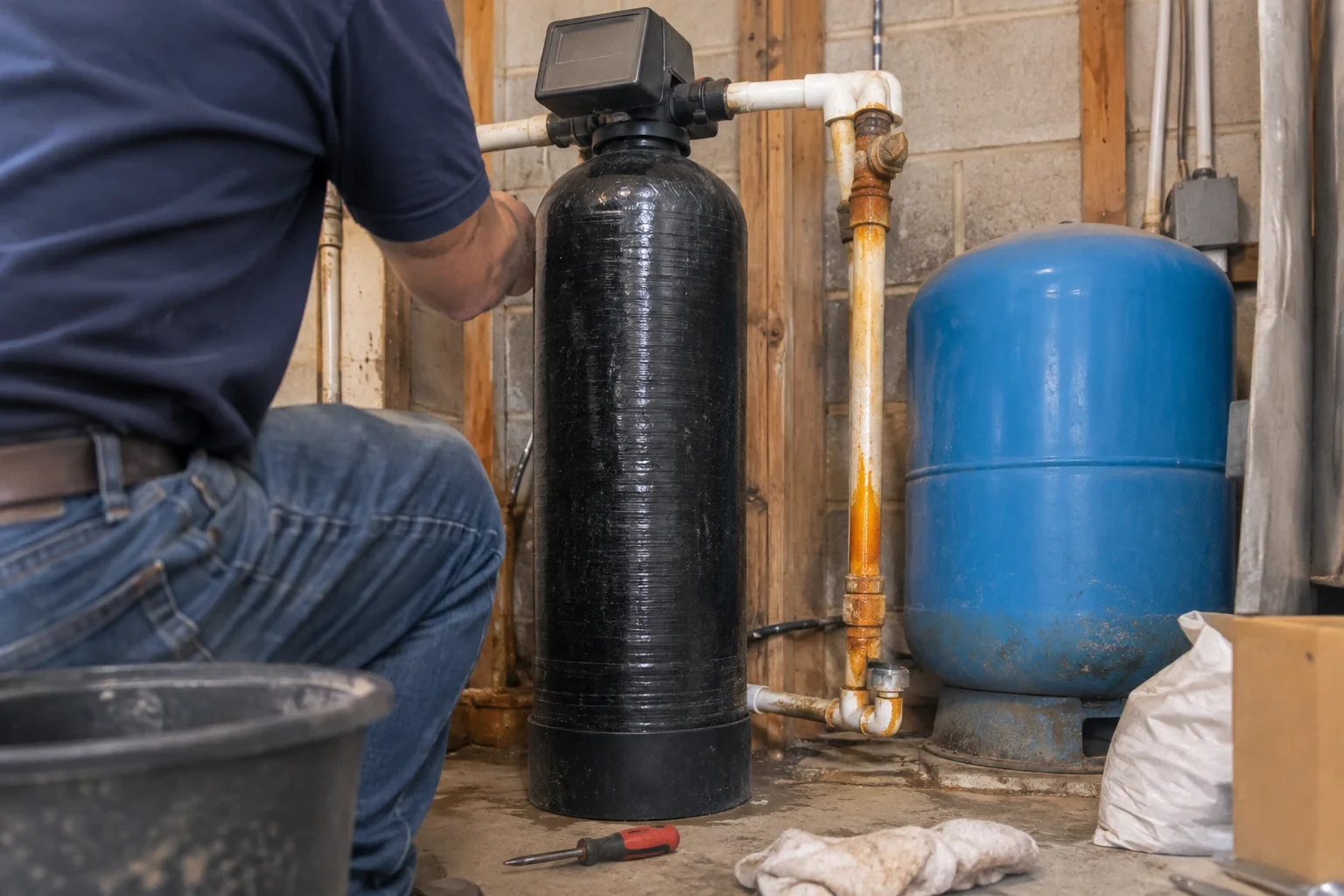
The fix is usually oxidation followed by filtration. Air or a mild oxidizer converts dissolved iron and sulfur into particles, and a bed of filter media catches them. The system backwashes itself on a schedule so the media stays clean. For homes on private wells around Uhland and Lockhart, this is often the change that finally keeps fixtures and laundry looking new.
We photograph what we find before any work starts and what we did when it is finished, so you can see the stained aerator, the slime in the tank and the clean water afterward side by side.
What the work includes
Lab-style water test
We measure iron, manganese, hydrogen sulfide, pH and hardness. pH matters more than most people expect, because oxidation media works poorly in water that is too acidic.
Source check at the water heater
If the smell only comes from hot taps, the cause may be the water heater's anode rod reacting with sulfate rather than sulfur in the supply. We check this first and tell you plainly if a filter is not the answer.
Matched treatment system
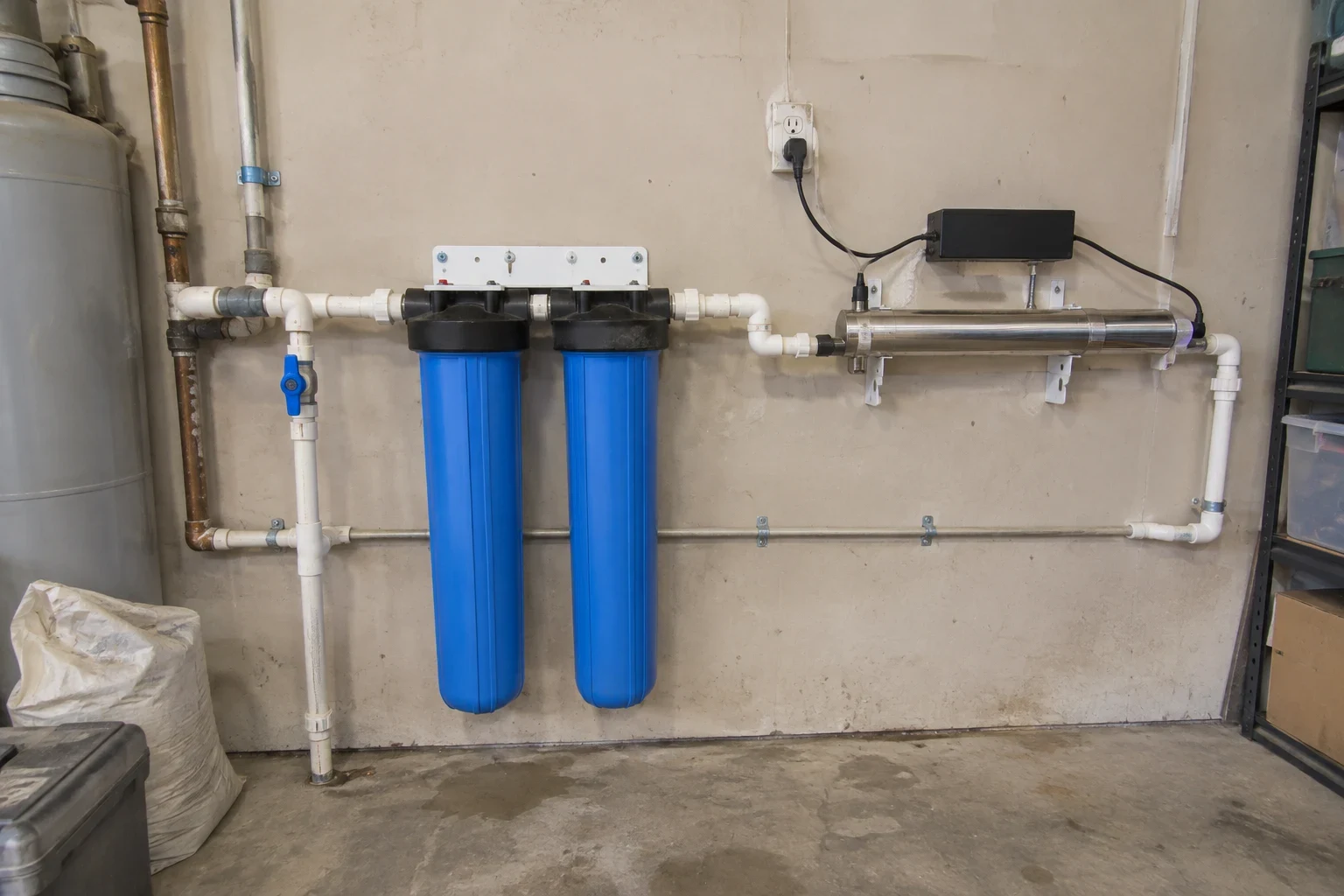
Most homes do well with an air injection oxidizing filter. Heavier iron or sulfur loads may need a small chlorine or peroxide feed with a contact tank before the filter.
Clean installation
We add a bypass valve so water can run around the system if ever needed, route the backwash drain properly and protect the floor and walls where we work. Free installation is included.
Photo report
You receive photos of the before condition, the installed equipment and the finished connections, along with your test numbers.
Signs your water carries iron or sulfur
Orange or brown stains
Rust rings in toilets, streaks below shower heads and a tint in white laundry point to iron, even at levels low enough that the water looks clear in a glass.
Rotten egg smell
A sulfur odor from cold taps usually means hydrogen sulfide in the supply.
Slime in the toilet tank
A reddish or gray gel on the tank walls is often iron bacteria. It can clog aerators and valves over time.
Black specks or gray stains
Dark residue can mean manganese, which travels with iron and needs the same kind of treatment.
Metallic taste
Coffee and tea that taste off, or ice cubes with a faint metal edge, are common early clues.
How the job runs
- 1
Free test and conversation
We test the water at your tap and look closely at the stains or smell you have noticed, noting where they are worst. You get the numbers explained in plain terms.
- 2
Written quote
We recommend one system and explain why it fits your levels. If a simpler step like an anode change would solve it, we say so.
- 3
Installation day
Most installs take part of a day. Water is off only while we tie into the main line, and we need a nearby drain and outlet for the control valve.
- 4
Setup and walkthrough
We set the backwash schedule, run the system through a full cycle and show you the bypass and settings. Your photo report follows.
What shapes the price
Iron and sulfur systems vary more than most water equipment, because the right size depends on what is actually in your water. Your quote is built from your own test results, and we walk you through each line before anything is installed.
- Iron and sulfur levels
- Light levels can be handled by a single oxidizing filter. High levels may need an oxidizer feed and contact tank ahead of it.
- Household flow rate
- More bathrooms and more people mean a larger media tank so pressure holds up while several fixtures run.
- Water chemistry
- Low pH may call for a neutralizing stage, and high hardness may make a water softener worth pairing with the system.
- Install location
- Distance to a drain and outlet, and how easily we can reach the main line, affect materials and time.
Iron and sulfur questions
Something not covered here? (512) 598-5861
Will a water softener remove iron on its own?
A softener can handle a small amount of clear ferrous iron, but it fouls quickly with higher levels or with sulfur. Most homes with noticeable staining need a dedicated iron filter. We will tell you which fits after testing.
The smell is only in my hot water. Do I need a filter?
Possibly not. Hot-only sulfur odor is often caused by the water heater's anode rod. We check that first, and if a different anode solves it, that is what we recommend.
Does the system lower water pressure?
A correctly sized system should cause little noticeable drop. Undersized tanks are the usual cause of pressure complaints, which is why we size from your flow needs and not just your test numbers.
How much upkeep is there?
Air injection systems clean themselves by backwashing, usually overnight. Media lasts years under normal use. If a chemical feed is part of your setup, it needs refilling periodically, and we show you how.
Will it also help with drinking water taste?
Removing iron and sulfur usually improves taste a great deal. For extra polish at the kitchen sink, some homeowners add one of our reverse osmosis systems afterward.
See what is in your water first
We will test for iron, sulfur and manganese, show you what we find and explain your options before you decide anything.