ServicesWell Water Filtration
Well Water Filtration and Treatment in Uhland
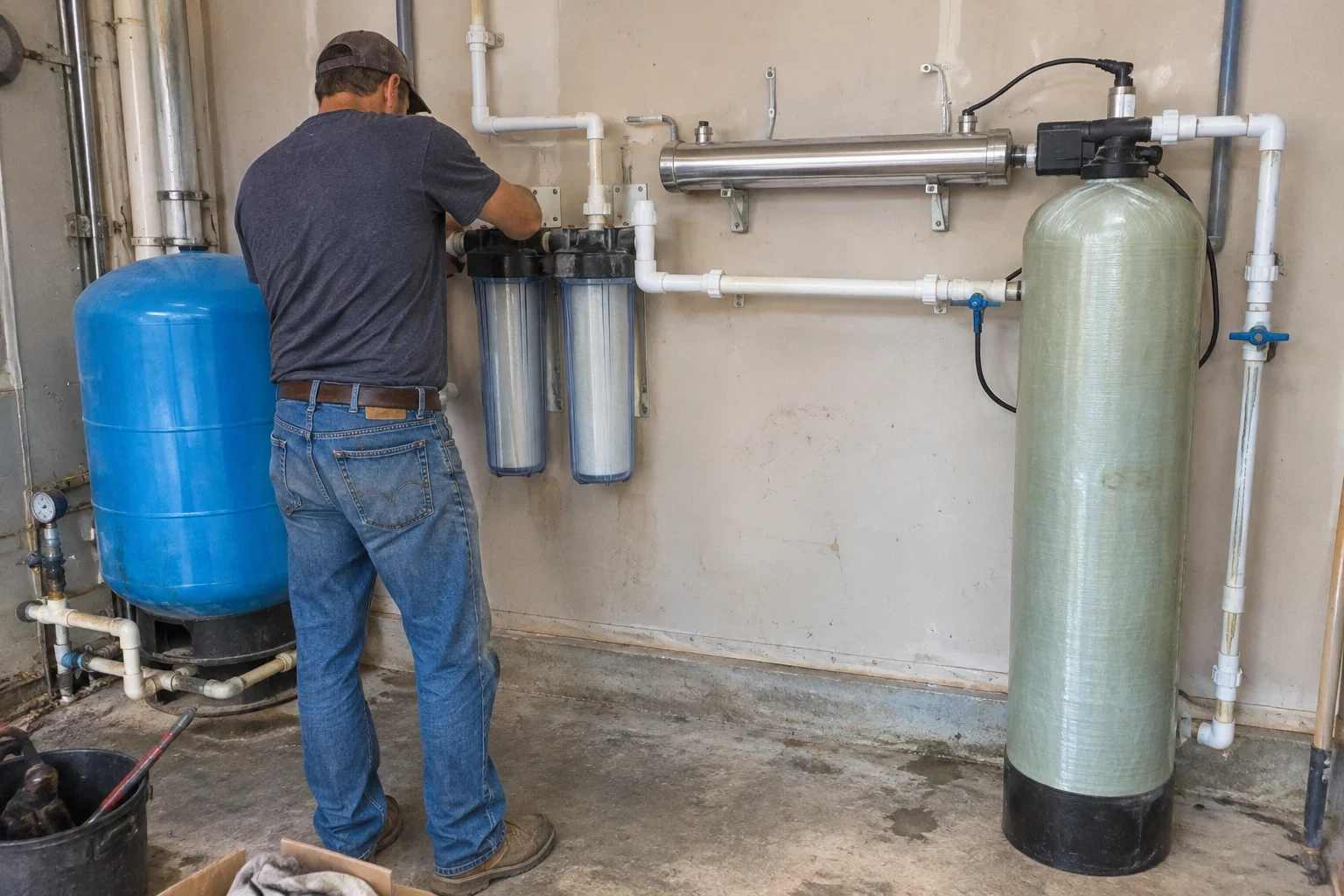
A private well has no utility treating it before it reaches your tap. We test what your well delivers, explain the results in plain terms, and build a filtration system around those numbers. Then we photograph each stage so you can see the work for yourself.
Filtration built around what your well delivers
Every well is its own water source. Two homes a short drive apart can draw very different water: one with fine sediment and a hint of rotten egg, another with orange staining in the tubs and scale on the faucets. A generic cartridge from the hardware store rarely addresses the real problem, and it can clog within weeks.
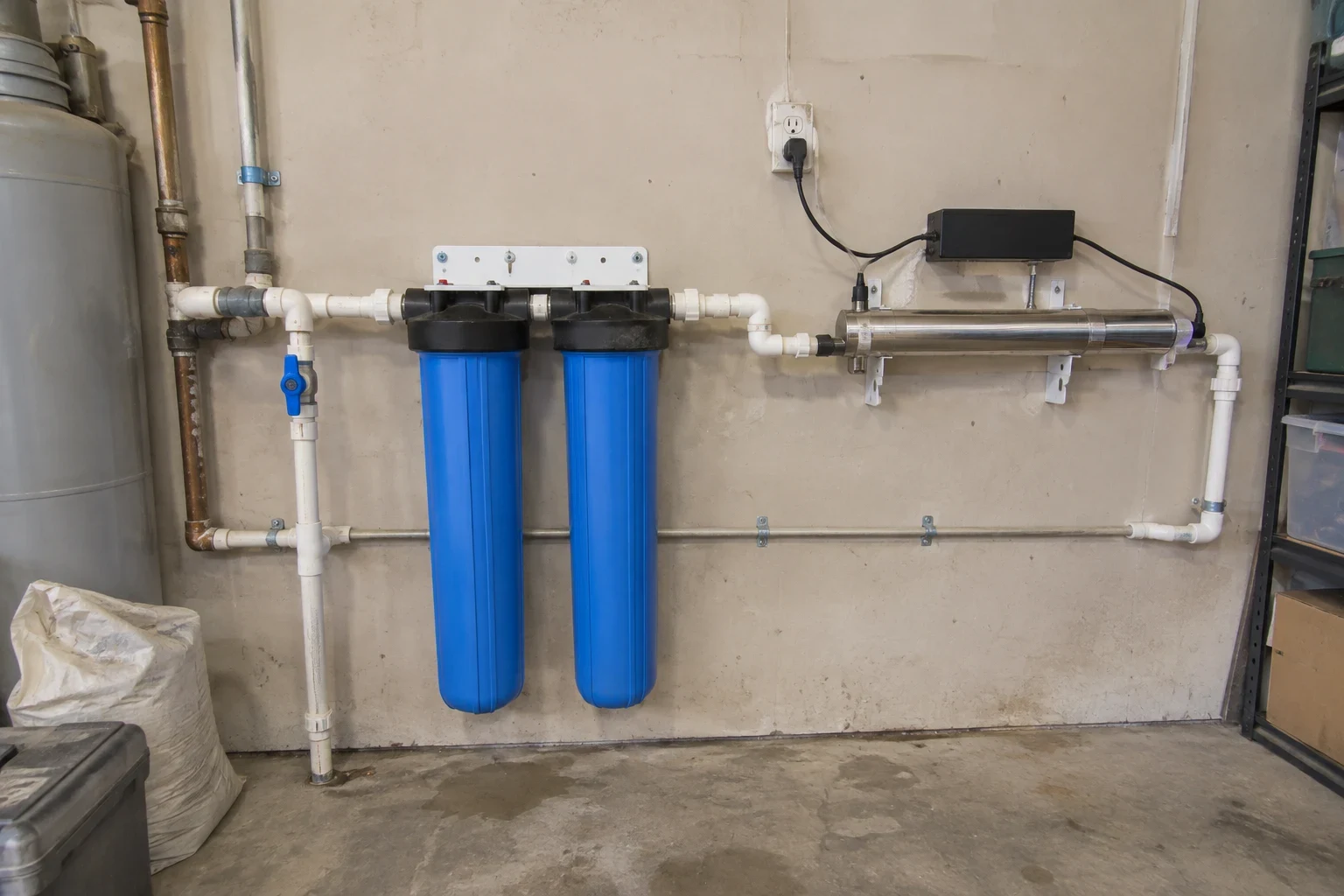
Our well water filtration starts with a test and a close look at your equipment. We note your pump's flow rate, your pressure tank setting and where the line enters your home. From there we recommend the fewest stages that will do the job. Every system starts with a sediment stage. Many also need a carbon or iron stage, and some add UV for bacteria.
You get photos of the wellhead area, the existing plumbing, each new component as it goes in, and the finished install with valves labeled. If the test shows your water needs less than you expected, we tell you that.
What the work includes
Lab-backed water test
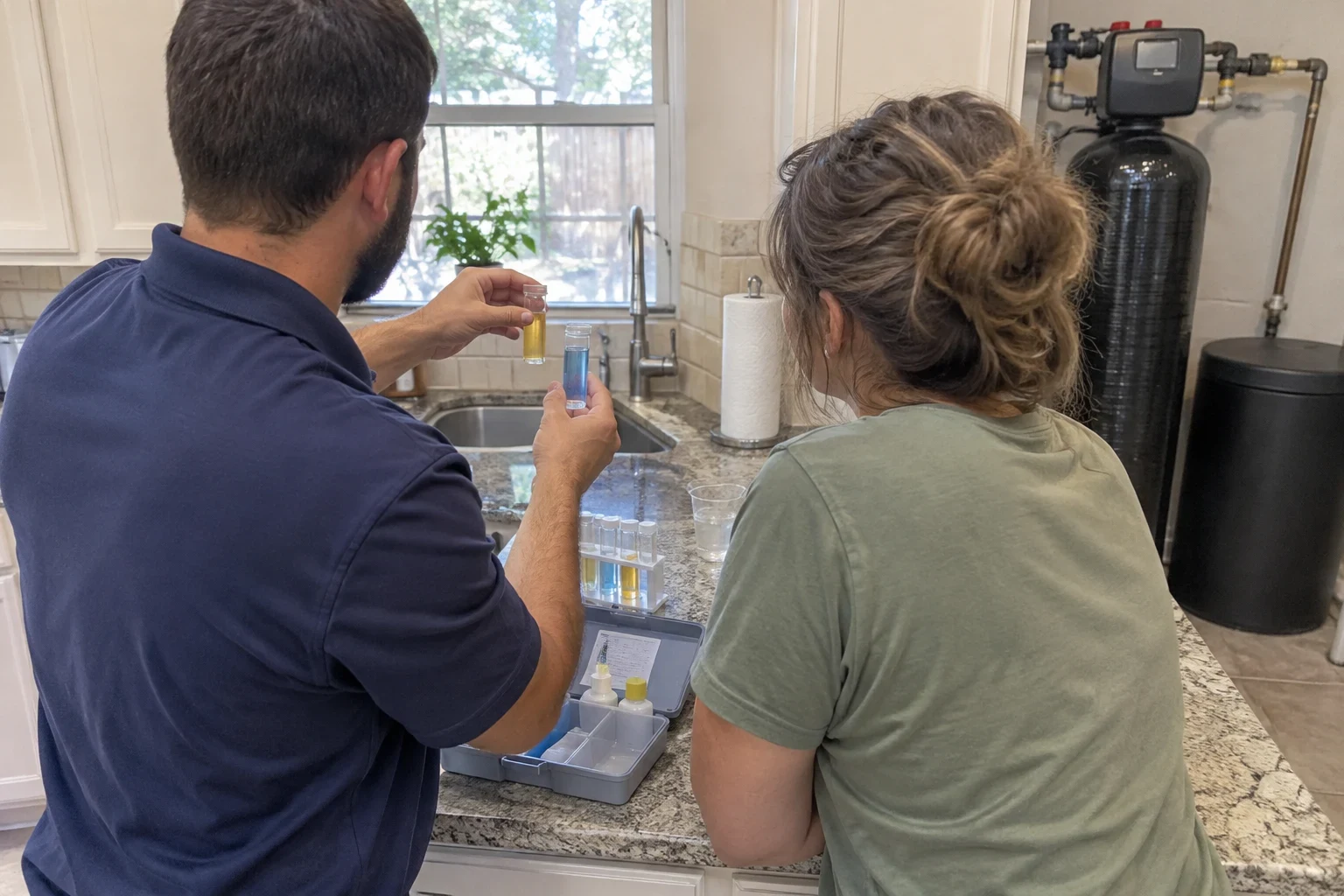
We take a sample from your well and test for hardness, iron, manganese, pH, sulfur odor and total dissolved solids. If bacteria is a concern, we sample for that as well. Our Water Testing & Analysis page explains how the sampling works.
Sediment pre-filtration
A spin-down or cartridge sediment filter catches sand and grit before it can reach the stages after it. This protects your fixtures and keeps the costly media downstream from fouling early.
Targeted treatment stages
Depending on your results, that may be an oxidizing filter for iron and sulfur, activated carbon for taste and odor, or a softener for heavy hardness. Iron and Sulfur Removal and Water Softener Installation each have their own page if one of those is your main problem.
UV disinfection when needed
If a coliform test comes back positive, or your well sits shallow, a UV chamber goes in last on the line. UV Water Purification covers the lamp and sleeve upkeep.
Bypass, gauges and labeling
We fit a bypass loop so you keep water during any service. Pressure gauges on either side of the filters let you see when a cartridge is loading up. Each valve gets a tag.
Signs your well water needs filtration
- Orange marks on porcelain and laundry
- Rust-colored rings in the toilet bowl, streaks in the tub and a tint on white clothes usually point to dissolved iron. Chlorine bleach tends to lock those marks into fabric instead of clearing them.
- Water that smells of sulfur
- An odor like spoiled eggs usually means hydrogen sulfide, and it is often worst when the hot tap runs. Beyond the smell, it slowly tarnishes and corrodes copper and silver fixtures.
- Grit in aerators and screens
- Sand or silt collecting in faucet aerators and appliance inlet screens means sediment is getting through. It wears down valves in your washer, dishwasher and water heater.
- White crust and cloudy glasses
- Scale on showerheads and spots on dishes are signs of hardness, which is common in Central Texas groundwater. Left alone, it builds up in your water heater too.
- No test in the last year
- Well water can shift after heavy rain, a dry spell or work on the well itself. If you can't recall when it was last checked, it is time for a test.
How a well filtration project runs
- 1
Test and inspect
We sample your water and look over the pump, pressure tank and point of entry. We photograph what we find, including any corrosion, leaks or older filter housings.
- 2
Walk through the results
We sit down with the numbers, explain what each reading means for your home and suggest a setup to match. Your quote comes by phone or face to face, and every stage is priced on its own line.
- 3
Install day
We lay down floor protection, shut off the water and plumb in the new stages with a bypass. Before the system is set, we check that your pump can supply the backwash flow any media tank needs.
- 4
Flush, retest and hand over
We flush each stage, check pressure across the system and retest the treated water. You receive the full photo set along with a simple filter-change schedule.
What moves the cost
The price follows what your test turns up and how many stages it takes to treat it. A well carrying only sand and silt calls for much simpler equipment than a well with iron, sulfur and bacteria all at once. Every component appears as its own line on your quote, so nothing is bundled out of sight.
- Number of treatment stages
- Each contaminant the test finds may call for its own stage. Sediment, iron, odor, hardness and bacteria are each handled differently.
- Pump flow and backwash needs
- Backwashing media tanks need enough flow to clean themselves. A lower-output pump may call for different media or a smaller tank.
- Equipment location and access
- A garage wall near the pressure tank is simple. Tight utility closets or a long run to the point of entry add time and fittings.
- Condition of existing plumbing
- Corroded fittings or a failing pressure tank switch may need attention before new filters go in. We photograph these and let you decide.
Your well filtration questions, answered
- Why test the water before you quote a system?
- A recommendation made without numbers is guesswork. It usually means paying for a stage you could skip, or missing the one your well actually needs. The test costs you nothing, and every line of your quote is built on its results.
- Is installation part of the price?
- We offer free installation. The quote we give you by phone covers the equipment, and the install day falls under that offer.
- Will adding filters lower my water pressure?
- Every stage adds a small amount of resistance. We match housings and media tanks to your pump's flow so the difference stays minor. The gauges we fit show the drop across the filters, and when that gap widens, a cartridge is due for a change.
- What upkeep does the system need?
- Sediment cartridges are usually changed a few times a year, sooner on wells that carry more sand. Media tanks rinse themselves on a scheduled backwash, and a UV lamp is typically replaced once a year. We leave you a written schedule that fits your own equipment.
- Can drinking water filtration be added later?
- It can. Plenty of homeowners put in an under-sink unit once the main system is running. Our Reverse Osmosis Systems page explains that option.
Start with a look at your water
We will test your well, show you what we find and explain a setup that fits it. You will have the photos and a clear quote before anything is installed.